Professional grooming is often described in terms of cleanliness, coat appearance, fragrance, and finish. Beneath every coat, however, is a complex biological structure that helps regulate water loss, interacts with microorganisms, and responds to environmental exposure and physical or chemical irritation. That structure is the skin barrier.
The canine skin barrier is not simply a protective covering. It is a dynamic system involving specialized epidermal cells, structural proteins, intercellular lipids, immune components, and microorganisms. Understanding this system changes how we think about cleansing, conditioning, and topical care. The coat is not separate from the skin: hair grows from follicles within a living organ, and grooming interacts with that environment.
1. The stratum corneum: more than dead skin
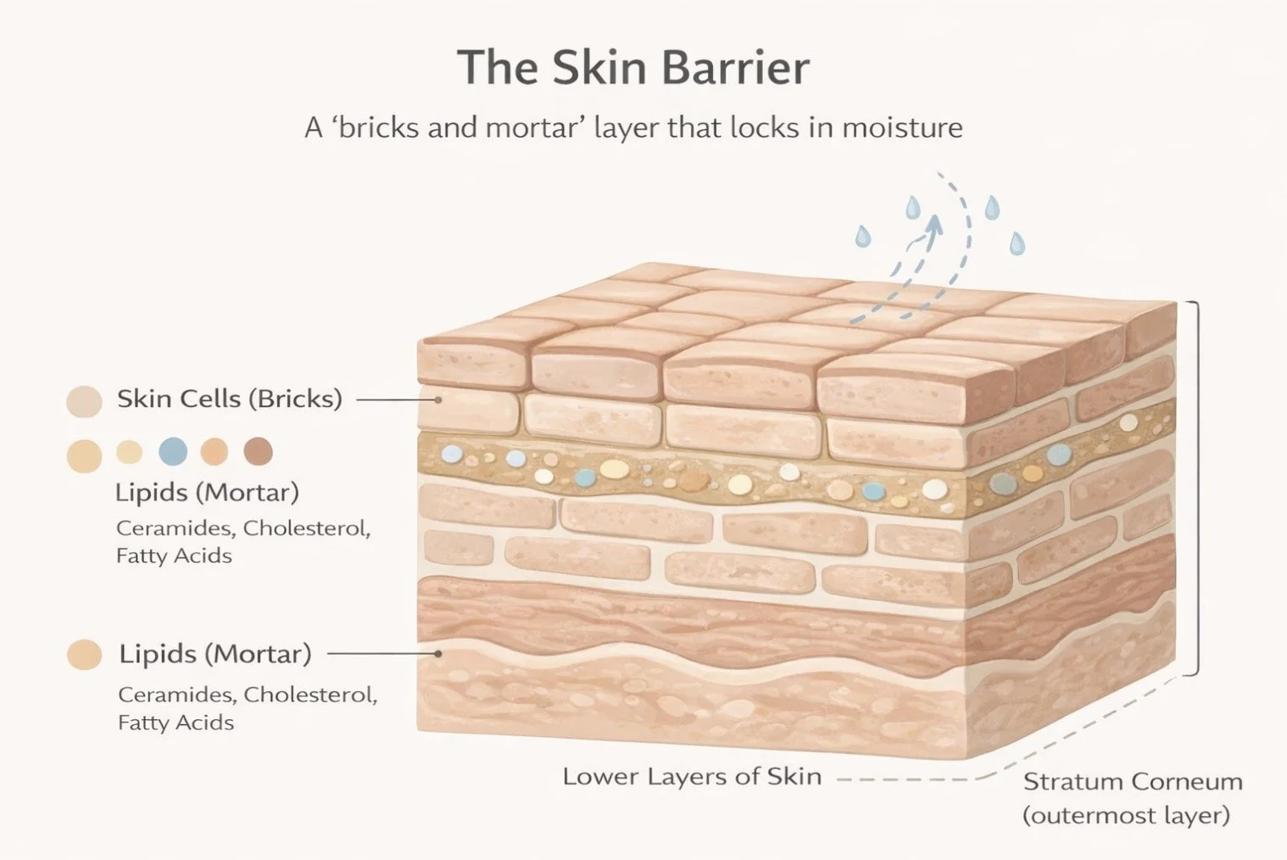
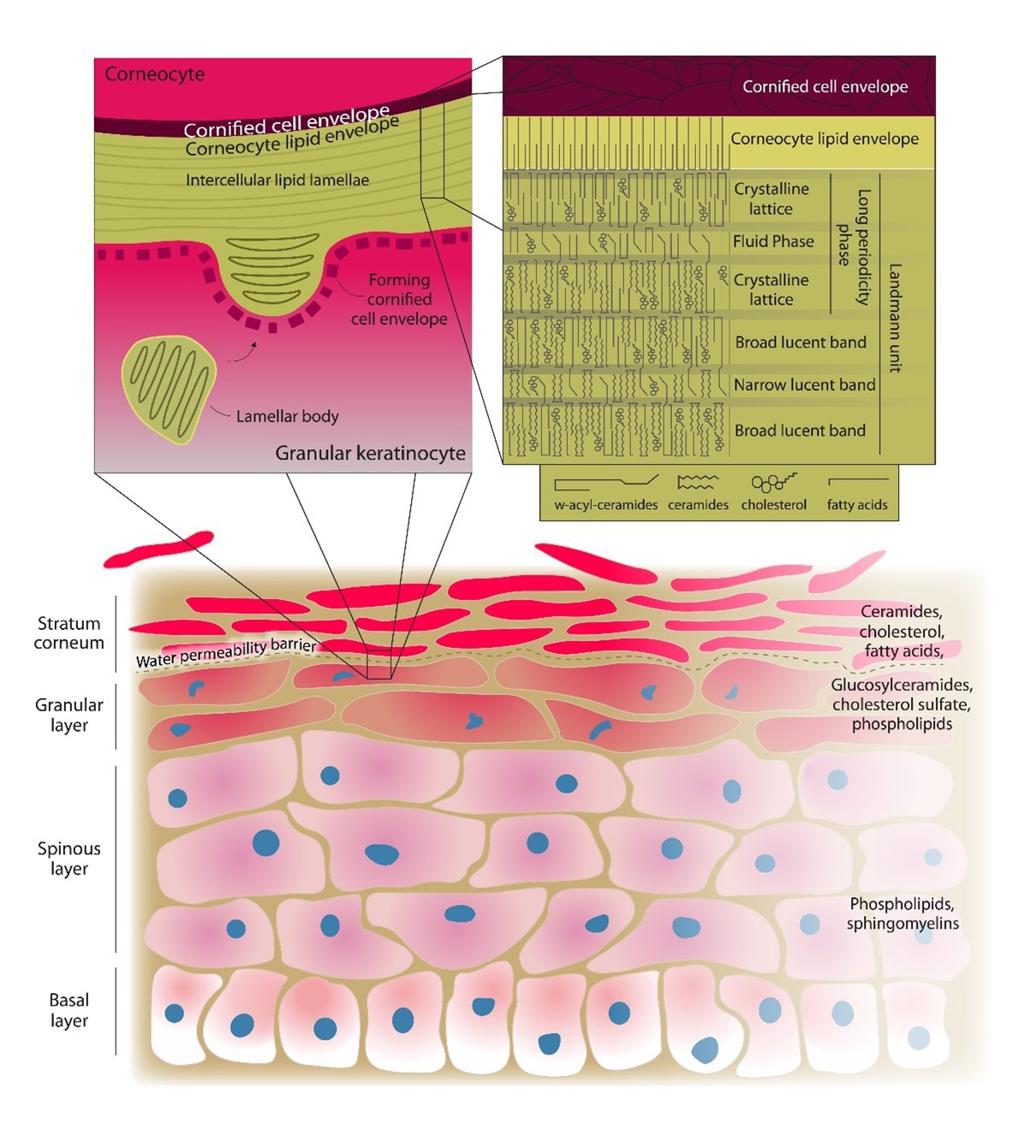
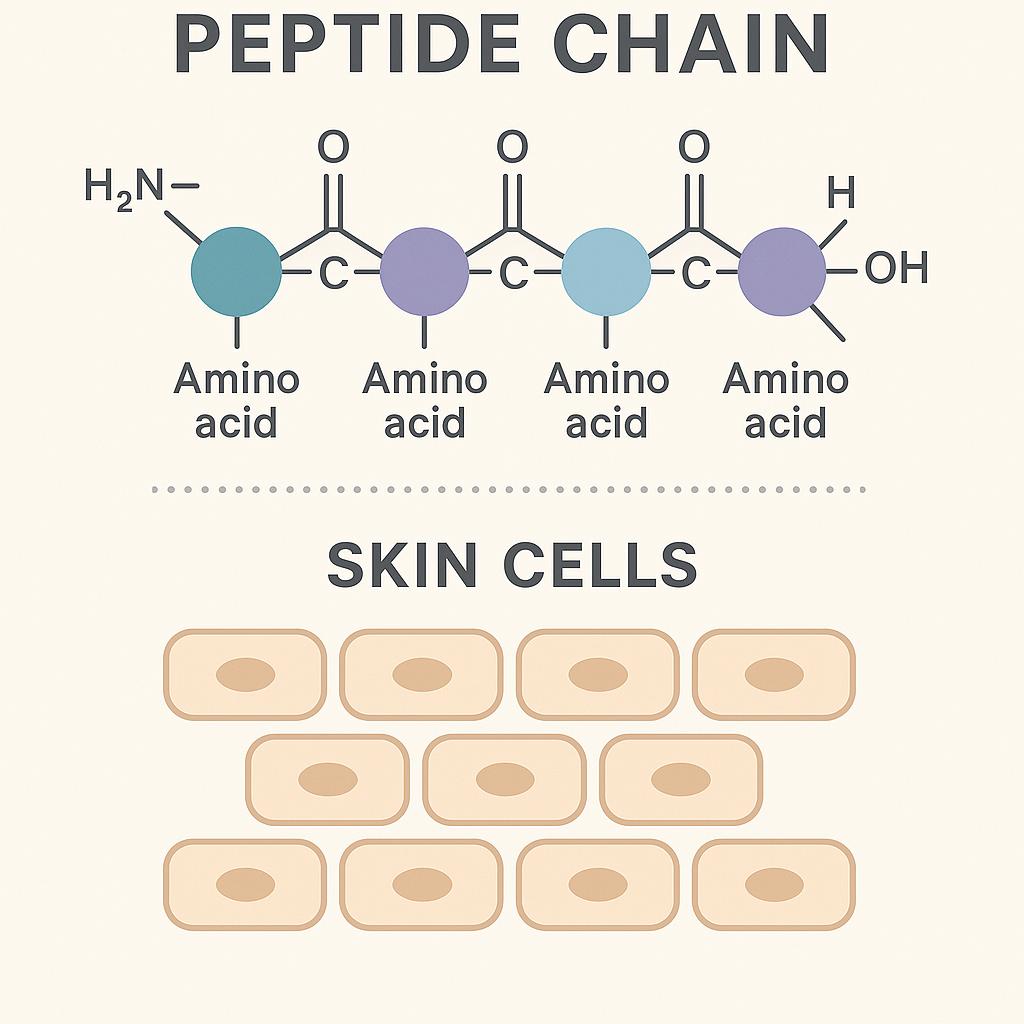
The outermost epidermal layer, the stratum corneum, consists largely of flattened, terminally differentiated cells called corneocytes, surrounded by an organized matrix of intercellular lipids. The familiar “bricks and mortar” analogy can help: corneocytes are compared with bricks and lipids with the material between them. The analogy is useful but incomplete. The stratum corneum is dynamic, continually renewed through epidermal differentiation and desquamation.
Its functions include limiting excessive water loss, restricting penetration of some external substances, providing mechanical protection, and participating in the skin’s relationship with its microbial environment. When this organization is disrupted, the skin may become more vulnerable to irritation, inflammation, and secondary infection. Canine atopic dermatitis is a complex inflammatory disease involving interacting immune responses, environmental exposures, microbial communities, and epidermal barrier function; it should not be reduced to a single “leaky skin” explanation.
2. Ceramides: structural components of canine skin
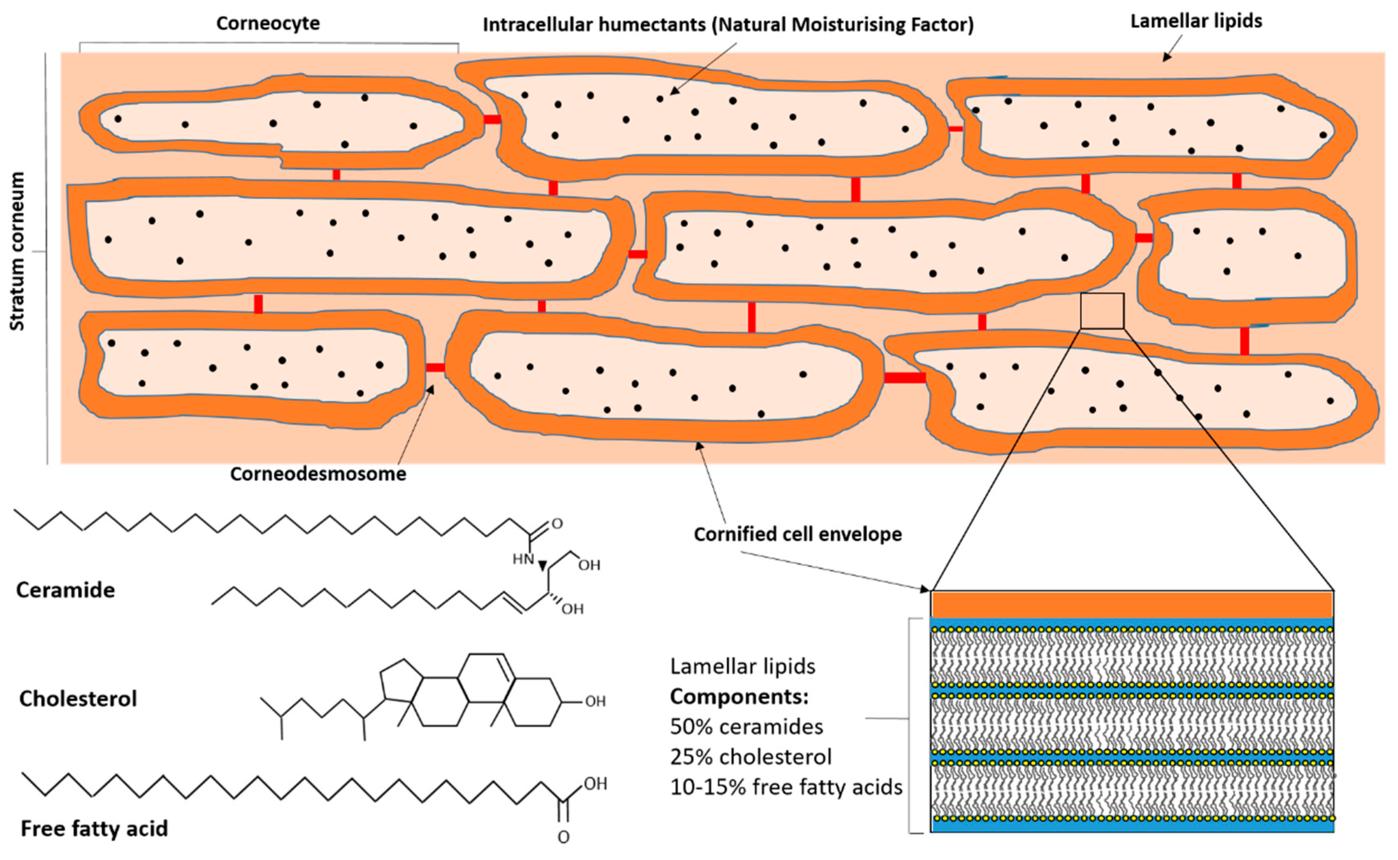
Ceramides are a family of lipids important to epidermal barrier organization. Each molecule includes a sphingoid base linked to a fatty acid; differences in those components create subclasses with distinct properties. Ceramides contribute to organized lipid structures between corneocytes and are part of the system that helps regulate water movement across the epidermis.
They are not interchangeable with ordinary cosmetic oils. Plant oils may provide emollient effects, lubricate hair fibers, or modify surface feel. Ceramides belong to specialized epidermal lipid architecture. This distinction matters when evaluating products described as moisturizing, nourishing, or repairing: a softer-feeling coat does not by itself demonstrate restoration of epidermal barrier function.
3. Research into canine-specific ceramide combinations
Cho and colleagues’ 2026 study, Optimization of a Canine-Specific Ceramide Complex and Evaluation of Its Effects on In Vitro and In Vivo Canine Skin, investigated whether selected ceramide combinations influenced inflammatory signaling and barrier development. The work used canine epidermal keratinocyte progenitor cells, reconstructed canine epidermis, and a preliminary live-dog evaluation. It examined, among other components, ceramide NS and ceramide EOP—subclasses with different structural features in epidermal lipid organization.
Among the ratios assessed, the authors reported favorable findings for a 4:1 CER[NS]:CER[EOP] combination in their experimental systems. In stimulated canine skin cells, the combination reduced expression of the inflammatory chemokines CCL17 and CCL22. Researchers also reported increased expression of keratin 10 and ceramide-synthesis-related markers, including ceramide synthases 3 and 4. In reconstructed epidermis, they observed changes in stratum-corneum organization and markers associated with barrier development. A preliminary in-vivo evaluation reported barrier-recovery and hair-condition observations.
These results are scientifically interesting because they examine defined lipid structures rather than treating all “moisturizers” as equivalent. They do not establish that any product containing a ceramide is clinically effective. The live-dog component was preliminary and involved healthy dogs; it does not establish treatment efficacy for naturally occurring atopic dermatitis. The proportion, concentration, delivery system, stability, study population, and measured outcome all matter. A promising mechanism is a reason for further study, not a substitute for clinical evidence.
4. Skin lipid composition varies across the body
A 2025 pilot lipidomic study by Fernandes and colleagues examined skin-surface lipids in Labrador Retrievers, including dogs with atopic dermatitis and healthy controls. Samples came from the thigh, interdigital skin, and inguinal region. The researchers identified 114 lipid species, with ceramides and diacylglycerols among prominent groups, and reported regional variation. Some individual lipid species differed between healthy and atopic dogs, although the overall proportions of major lipid classes were not significantly different between groups.
This finding complicates the assumption that canine skin has one uniform lipid profile. Interdigital skin, skin folds, and the thigh experience different moisture, friction, exposure, and mechanical conditions. The study does not show that each body region requires a particular commercial product. It does provide a scientific rationale for investigating localized skin environments and avoiding the assumption that every area should receive identical cleansing, drying, or topical application.
5. Cleansing and barrier integrity
Cleansing is a necessary part of grooming. Appropriately selected shampoos remove soil, environmental material, excess surface oils, and other residues. Most shampoos use surfactants: molecules that help water interact with oily substances so that material can be dispersed and rinsed away. Surfactant systems differ in cleansing behavior, foam, irritation potential, and compatibility with other ingredients.
The finished product matters more than any single ingredient name. Concentration, pH, fragrance, preservatives, dilution, contact time, frequency, water temperature, and rinsing all influence the cleansing experience. An unnecessarily aggressive routine may compromise comfort, while inadequate cleansing may also be inappropriate—especially when a veterinarian has prescribed a bathing protocol for a diagnosed condition. The goal is not to avoid cleansing, but to select and use a method appropriate to its purpose and the individual dog.
Routine cosmetic bathing and therapeutic bathing are not interchangeable. A groomer can support careful hygiene and communicate observations, but should not change veterinary treatment instructions or represent a cosmetic product as treatment for disease. Dogs with persistent itch, redness, odor, lesions, pain, or recurrent skin problems need veterinary assessment.
6. Conditioning the coat versus supporting the skin
Conditioners and barrier preparations are sometimes discussed as if they perform identical functions. A coat conditioner may reduce friction, improve combability, alter static, or leave a lubricating film on hair fibers. These changes can make brushing more manageable and may reduce mechanical stress during grooming. A skin-focused preparation may instead be designed to influence surface hydration, lipid organization, or comfort. Some formulations may serve more than one cosmetic function, but claims about the finished product require evidence specific to that product.
A cleanser, rinse-off conditioner, and leave-on product can each have a different role. More steps do not automatically mean better care. Selection should reflect the dog’s skin presentation, coat characteristics, tolerance, compatibility of products, and the intended purpose of the routine.
7. Transepidermal water loss and professional observation
Transepidermal water loss (TEWL) is water passing through the epidermis and evaporating from the skin surface. Researchers use TEWL among several measures of barrier function. Increased TEWL can be consistent with reduced barrier efficiency, but readings vary with environment, anatomical location, equipment, and measurement protocol.
For groomers, TEWL is a useful scientific concept—not a condition that can be diagnosed by looking at a dog. A shiny coat does not establish that the skin barrier is healthy; visible dryness does not identify its cause. Professional observation can notice changes and support communication, while diagnosis and treatment remain veterinary responsibilities.
8. What the evidence can mean for grooming
Current research suggests several careful practice principles. Consider skin condition and the purpose of a product before selecting a cleansing or conditioning step. Evaluate the finished formulation rather than relying on a fashionable ingredient name. Recognize that paw webs, folds, sparsely coated regions, and dense coat areas experience different local conditions. Distinguish cosmetic improvement in hair feel from measured changes in skin-barrier function. Refer concerns that may be medical to a veterinarian.
A groomer does not need to diagnose disease to contribute to skin-conscious care. Careful observation, appropriate product use, gentle handling, thorough rinsing, sensible drying, and clear communication with veterinary professionals are meaningful parts of the animal’s broader care. Research should sharpen professional judgment, not extend a groomer’s scope of practice.
9. The ONEDOG Wellness perspective
At ONEDOG Wellness, we believe the future of professional grooming requires a deeper understanding of the animal beneath the coat. Skin is a living environment with structural, microbial, sensory, and immunological functions. Our interest in canine skin science reflects a commitment to examining how grooming practices interact with that environment.
Ceramide research is compelling because it moves discussion beyond the appearance of hydration toward the biological organization of the epidermis. Future work may examine more precisely defined lipid systems, individual differences, and collaboration among groomers, veterinary dermatologists, and formulation scientists. Our responsibility is to distinguish what research has demonstrated from what remains a possibility. That distinction is essential to credible, ethical innovation.
Scientific references
- Cho et al. (2026). “Optimization of a Canine-Specific Ceramide Complex and Evaluation of Its Effects on In Vitro and In Vivo Canine Skin.” Animals, 16(14), 2148. Full text at PMC · Publisher page
- Fernandes, B., et al. (2025). “Unlocking the potential of lipidomic analysis in canine atopic dermatitis research: Insights from a pilot study.” Veterinary Dermatology, 36(4), 462–473. Full article · PubMed
- Whittle, M. J., et al. (2024). “Metagenomic characterisation of canine skin reveals a core healthy skin microbiome.” Scientific Reports, 14, 20104. Full article
- Discepolo, D., et al. (2023). “Impacts to canine dermal microbiota associated with repeated bathing.” Frontiers in Veterinary Science. Full article at PMC